
Heidelberg Laureate Forum HLF 2026: Fully Funded Application Guide for Germany
Apply for Heidelberg Laureate Forum HLF 2026: Meet Nobel & Turing Laureates

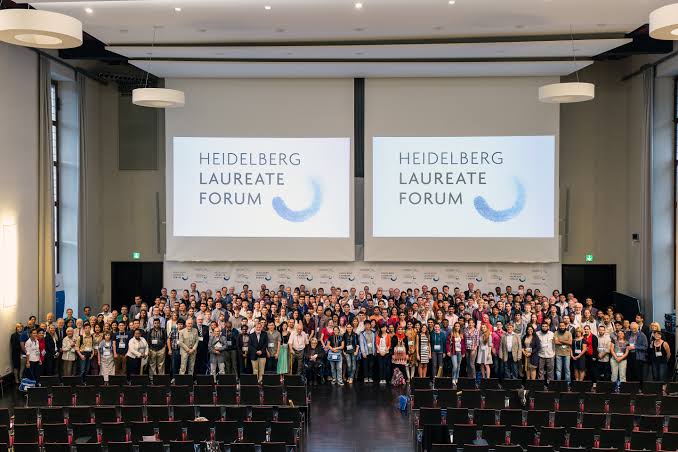
Heidelberg Laureateorum HLF 2026: The Comprehensive Guide to the “Nobel” Gathering of Math & CS in Germany
As we approach 2026, the anticipation for the Heidelberg Laureate Forum HLF 2026 is building among the global scientific community. For young researchers in mathematics and computer science, this event is more than just a conference; it is a pilgrimage to the intellectual heart of Europe. Located in the picturesque city of Heidelberg, Germany, the forum offers a once-in-a-lifetime fully funded opportunity to interact with the laureates of the most prestigious prizes in these disciplines.
Whether you are an undergraduate student with a burning passion for topology, a PhD candidate wrestling with machine learning algorithms, or a Postdoc looking to define your academic legacy, the HLF 2026 is your gateway to the future. In this extensive guide, we will dive deep into everything you need to know: from the intricacies of the application process and the secrets to writing a winning motivation letter, to the detailed eligibility criteria and the vibrant culture of Heidelberg itself.



Read on to discover how you can secure your spot at the 13th Heidelberg Laureate Forum and change the trajectory of your scientific career forever.
What is the Heidelberg Laureate Forum HLF?
The Heidelberg Laureate Forum (HLF) is an annual networking conference that connects highly talented young researchers from all over the world with the recipients of the most renowned awards in mathematics and computer science. Established in 2013, the forum was the brainchild of Klaus Tschira, a German physicist and co-founder of the software giant SAP. His vision was simple yet profound: to create a platform where the “masters” of the field could pass the torch of knowledge and inspiration to the “next generation.”
Unlike traditional academic conferences where the focus is often strictly on presenting papers and rigid schedules, the HLF prioritizes interaction. The schedule is designed to facilitate informal chats, open discussions, and social events that break down the barriers between a student and a laureate.
The “Big Prizes” Represented
The core attraction of the HLF is the presence of the laureates. These are individuals who have received the highest honors in their respective fields. Understanding these awards is crucial to understanding the prestige of the HLF:
- The Abel Prize: Often described as the “Nobel Prize for Mathematics,” it is awarded annually by the King of Norway to one or more outstanding mathematicians. Meeting an Abel laureate is akin to meeting a rock star of the mathematical world.
- The ACM A.M. Turing Award: Generally recognized as the highest distinction in computer science, this award honors contributions of lasting and major technical importance to the computer field. It is named after Alan Turing, the father of theoretical computer science.
- The ACM Prize in Computing: This recognizes early-to-mid-career fundamental innovative contributions in computing that, through their depth, impact, and broad implications, exemplify the greatest achievements in the discipline.
- The Fields Medal: Awarded every four years to mathematicians under the age of 40, this is perhaps the most famous prize in mathematics, celebrating future potential as much as past achievement.
- The IMU Abacus Medal (formerly Nevanlinna Prize): This award honors outstanding contributions in mathematical aspects of information sciences, bridging the gap between math and CS.
By bringing these diverse giants together, the Heidelberg Laureate Forum HLF creates an interdisciplinary melting pot that is unique in the scientific world.
Why You Must Apply for HLF 2026
The competition to get into the HLF is fierce, but the rewards are immeasurable. Here is why you should prioritize your application for the 2026 cohort:
1. Unmediated Access to Laureates
At most conferences, keynote speakers are whisked away after their talks. At HLF, they sit with you at lunch, join you on boat trips, and debate with you during coffee breaks. You have the chance to ask a Turing Award winner about the future of AI or discuss the intricacies of algebraic geometry with a Fields Medalist. This unmediated access can demystify success and provide mentorship that you cannot find in textbooks.
2. A Global Network of Peers
While the laureates are the draw, your fellow attendees are the future. The HLF selects the top 200 young researchers from roughly 60-80 nations. These are your future collaborators, co-authors, and colleagues. The bonds formed during the week in Heidelberg often lead to lifelong professional relationships and international research projects.
3. Career Acceleration
Having “Heidelberg Laureate Forum Alumnus” on your CV is a badge of honor. It signals to future employers and grant committees that you have been vetted by an international panel of experts and deemed one of the most promising young minds in your field. Furthermore, the forum features a “Career Market” where leading academic institutions and tech companies scout for talent.
4. Interdisciplinary Inspiration
In 2026, the line between mathematics and computer science is blurrier than ever. HLF embraces this convergence. A mathematician might find the solution to a topology problem in a computer scientist’s algorithm, and vice versa. The cross-pollination of ideas is a core tenet of the forum.
Eligibility Criteria: Who Can Apply?
The Heidelberg Laureate Forum HLF 2026 is inclusive yet selective. It targets “Young Researchers” at various stages of their academic careers. Understanding which category you fit into is the first step to a successful application.
1. Undergraduate / Pre-Master
You are eligible if you are currently enrolled in a Bachelor’s or Master’s program in mathematics, computer science, or a closely related field.
Note: You must not yet hold a Master’s degree at the time of application. If you are a master’s student, you fit here.
2. Graduate PhD
You are eligible if you are currently enrolled in a PhD program and working toward your doctorate. This is often the most competitive category as PhD students usually have the most to gain from discussing their specific thesis topics with laureates.
3. Postdoc
You are eligible if you have earned your PhD within the past 5 years (prior to the HLF 2026 dates). This category is not limited to those holding a classic academic “Postdoc” title. If you are working in the private sector (industry), as an Assistant Professor, or in a research lab, you are welcome to apply, provided your PhD is recent.
Crucial Note: The selection is based on scientific excellence. The committee looks for deep knowledge, curiosity, and the potential to contribute to the scientific community. They are not just looking for good grades; they are looking for future leaders.
Important Dates and Deadlines for HLF 2026
Missing a deadline is the easiest way to get rejected. Mark these dates in your calendar for the Heidelberg Laureate Forum HLF cycle:
- Application Opens: November 11, 2025
- Application Deadline: February 11, 2026 (11:59 PM CET / UTC+1)
- Review Phase: Mid-February to Mid-April 2026
- Notification of Acceptance: End of April 2026
- Travel Grant Application Window: May 4 to June 24, 2026
- The Forum Dates: September 13 – 18, 2026
- Arrival/Registration: September 12, 2026
- Departure: September 19, 2026
Step-by-Step Application Guide
The application for the Heidelberg Laureate Forum HLF 2026 is handled entirely online through the HLF application portal. Here is a detailed breakdown of what you will need:
1. Personal Profile
Basic information including your contact details, current affiliation, and university history.
2. Curriculum Vitae (CV)
Your CV should be standard academic format. Highlight your education, publications (if any), awards, conference presentations, and relevant skills. For undergraduates, focus on coursework and any research projects or internships.
3. Motivation Letter (The Make-or-Break Factor)
This is arguably the most important part of your application. You need to articulate why you want to attend.
Tips for the Motivation Letter:
– Be Specific: Don’t just say “I want to meet smart people.” Mention specific laureates whose work influences yours.
– Show Impact: Explain how attending HLF 2026 will impact your current research or studies.
– Be Genuine: The reviewers read thousands of generic letters. Let your passion and your unique scientific voice shine through.
4. Letter of Recommendation
You will need at least one letter of recommendation from a scientist who knows your work (a professor, supervisor, or mentor).
Tip: Ask your recommender early (at least 3-4 weeks before the deadline). Ensure they understand the prestige of the HLF so they write a strong, detailed letter rather than a generic template.
5. Research Summary (For PhDs and Postdocs)
If you are a PhD candidate or Postdoc, you must submit a summary of your thesis or current research. This should be written in a way that is accessible to a general scientific audience, not just specialists in your narrow sub-field.
Financial Benefits: Is it Really Fully Funded?
One of the most attractive aspects of the Heidelberg Laureate Forum HLF is its accessibility. The organizers recognize that talent is distributed equally, but resources are not. Here is the financial breakdown for successful applicants:
Accommodation and Meals
The Heidelberg Laureate Forum Foundation (HLFF) covers the full cost of accommodation for all selected young researchers during the event. You will stay in comfortable hotels in Heidelberg. Furthermore, all meals (breakfast, lunch, dinner) and coffee breaks are provided during the program. You will be well-fed with excellent German and international cuisine.
Travel Costs and Grants
Here is where you need to pay attention. The HLF does not automatically cover your flight tickets or train fares to Germany. However, they operate on a “needs-based” system.
Participants are first encouraged to seek funding from their home institutions or national funding agencies. If your university cannot support your travel, you can apply for a Travel Grant from the HLFF. This application opens after you have been accepted (typically in May). If you can prove that you lack funding, the HLFF is very generous in supporting your travel to ensure that financial constraints do not prevent top talent from attending.
Visa Support
For international applicants requiring a Schengen visa to enter Germany, the HLFF provides official invitation letters and support documentation to streamline the visa process.
The Venue: Heidelberg, Germany
The setting of the forum contributes significantly to its magic. Heidelberg is one of Germany’s most beautiful and historic cities. Known for its romantic cityscape, the ruins of the Heidelberg Castle perching above the river Neckar, and the charming Old Town (Altstadt), it provides an inspiring backdrop for intellectual exchange.
Heidelberg University
The academic partner of the forum is Heidelberg University (Ruprecht-Karls-Universität Heidelberg). Founded in 1386, it is Germany’s oldest university and a powerhouse of European science. Walking the same halls as Hegel, Max Weber, and Bunsen adds a layer of historical weight to the modern discussions of the HLF.
Social Events
The HLF is not all work. The program includes legendary social events:
– Bavarian Night: A traditional German celebration with food, music, and perhaps some Dirndls and Lederhosen.
– Boat Trip on the Neckar: A relaxing cruise that allows for fluid conversation with laureates while watching the scenery pass by.
– Gala Dinner at Heidelberg Castle: A formal dining experience in the historic castle ruins, often the highlight of the week.
Ready to Apply?
Don’t wait until the last minute! The deadline is February 11, 2026.
Start drafting your motivation letter today and contact your referees immediately.
Frequently Asked Questions (FAQ)
We have researched the most common queries regarding the Heidelberg Laureate Forum HLF 2026 to help you prepare.
Q: Can I apply if I have already attended a previous HLF?
A: Generally, no. The HLF aims to give this unique opportunity to as many different young researchers as possible. If you have already participated in a previous Heidelberg Laureate Forum, you are typically not eligible to apply again, unless there are exceptional circumstances or you are applying in a vastly different capacity (though this is rare).
Q: Do I need an IELTS or TOEFL score to apply?
A: No, official language test scores are not a mandatory requirement for the HLF application. However, the entire conference is conducted in English. You must be proficient enough to understand lectures, participate in complex scientific discussions, and network socially. Your application documents (motivation letter, CV) will serve as proof of your English proficiency.
Q: What if my field is strictly Physics or Engineering?
A: The HLF focuses on Mathematics and Computer Science. However, these fields are increasingly interdisciplinary. If your research in Physics or Engineering has a very strong theoretical basis in math or heavy computational focus (e.g., theoretical physics, computational engineering), you may be eligible. You must demonstrate a close relation to the core disciplines of Math/CS in your application.
Q: How many people are selected for HLF 2026?
A: The Scientific Committee selects exactly 200 young researchers. The split is usually 100 from Mathematics and 100 from Computer Science, ensuring a balanced representation of both disciplines.
Q: Is there an application fee?
A: No, there is absolutely no fee to apply for the Heidelberg Laureate Forum.
Q: When will I know if I got the Travel Grant?
A: Travel grant applications are processed after the selection of participants. You will typically apply for the grant in May/June 2026, and decisions are made quickly to allow you to book flights. Note that you must first be accepted to the forum to apply for the grant.
Conclusion
The Heidelberg Laureate Forum HLF 2026 represents a pinnacle of opportunity for young scientists. It is a space where the hierarchy of academia dissolves into genuine curiosity and shared passion. Attending HLF is not just about adding a line to your CV; it is about finding your place in the global scientific family.
If you are a young researcher in Germany or anywhere else in the world, with a passion for mathematics or computer science, do not let this chance slip away. Prepare your documents, write your story with conviction, and submit your application before February 11, 2026. The future of science is meeting in Heidelberg—make sure you are there.
